
Long Brochures Printing Singapore
For company profiles, service menus and pitch decks.
Long brochure printing for company profiles, service menus and pitch decks — more than a flyer carries, lighter than a booklet. Offset-printed on art paper or art card, folded the way your story reads, with the price updating live as you spec it.
Order more, pay less per piece.
How we print.


Tell us the job,
we'll tell you the pick.
Everything worth knowing,
before you order long brochure printing in Singapore.
A long brochure is a flat sheet that becomes a story when it folds. Four choices shape it — the flat size you start from, the fold path, the paper weight and the lamination — and together they decide whether it reads like a hand-out or like the company behind it. Here’s each one, plain.
Type A vs Type B — what the extra panel buys you.
Type A is an A4 × 3 flat sheet (630 × 297mm). It folds into the classic three-panel letter (tri-fold), an accordion (Z-fold), a roll fold, or any of those with a compound cross-fold for a pocket-sized finish — the standard long brochure most people picture when you say “tri-fold”.
Type B is an A4 × 4 flat sheet (840 × 297mm) — one extra panel of room. Gate folds (outer panels fold inward like doors), double-gate, a four-fold accordion (five panels) and the compound options live here. Type B costs a little more per piece, but the reveal of a gate fold — or the pacing across five accordion panels — makes a brochure feel deliberate rather than generic.
The fold guide — letter, accordion, gate, roll and compound.
Letter fold (C-shape) — two parallel folds, panels close inward like a letter; the default tri-fold, opens cleanly and holds three messages. Accordion (Z-fold) — zigzag folds that open like a fan, so panel 1 → 2 → 3 reads in order without flipping. Gate fold (Type B) — outer panels fold inward like doors before the centre reveal, for when the cover should hold back the headline.
Roll fold — panels roll inward, each slightly smaller, common on product sheets where the outer panel is a teaser. Compound folds — a letter or accordion plus a cross half-fold, so the brochure finishes pocket-sized but opens to the full panel count. Handy for travel, hospitality and trade-show pieces a reader carries home.
Paper weight: 128gsm, 157gsm or 260gsm.
128gsm Art Paper is the mailer standard — light, drapes naturally when folded, lowest cost per piece. Reach for it on direct mail, event hand-outs and anywhere a brochure is read once and set down.
157gsm Art Paper is the corporate and property weight — heavier in the hand, premium without the jump to card. Good for sales decks and brochures that sit in a display rack and need to read as serious. 260gsm Art Card is thick stock: it holds a crease without flaring, sits flat on a desk and reads as premium on contact — for high-touch pieces where the brochure itself is part of the impression.
Lamination — matt or gloss, one face or both.
Matt lamination mutes the sheen — colours read calm and tactile, photos look intentional rather than flashy. Gloss lamination is the opposite: vivid colour, high sheen and light-catching, so photos pop and brand colours hit full saturation. Both lay a thin protective film over the printed face.
Single-sided lamination covers the front face only — lighter, and fine for brochures that are picked up, read and put down. Double-sided covers both faces — the longest-wearing option for brochures that get handed around, stuffed into bags or kept for reference. Single-sided is the common pick; go double when the brochure is the keepsake.
Common questions.
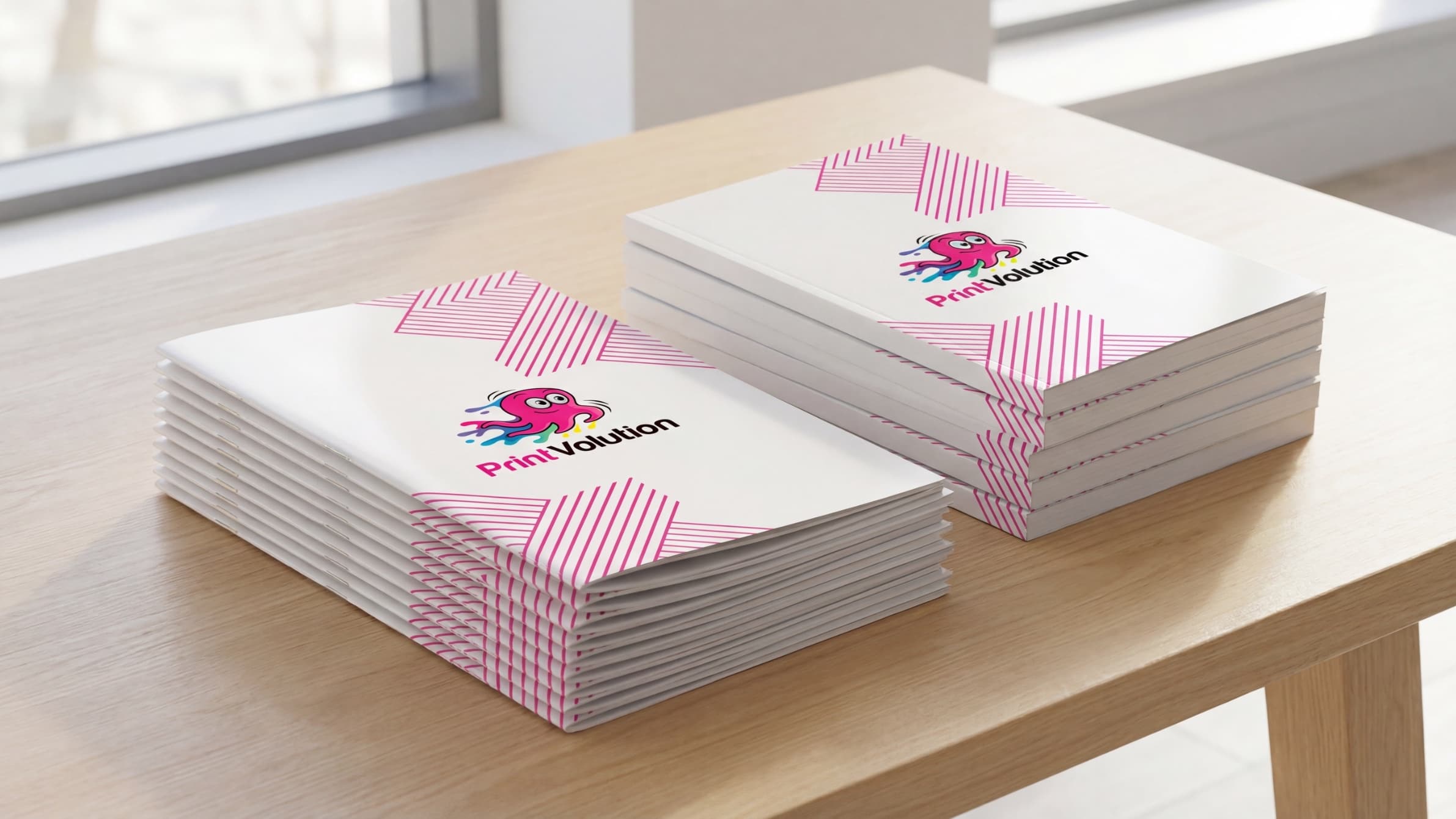
Long brochure printing in Singapore for company profiles, service menus, pitch decks, product guides and event programmes — Type A (A4×3) or Type B (A4×4) flat sheets on 128gsm / 157gsm Art Paper or 260gsm Art Card, eleven fold layouts, optional matt or gloss lamination on one face or both. Offset printed, full colour, runs 300 to 10,000.