DTF vs DTG vs Screen Printing vs Sublimation: Which T-Shirt Printing Method Wins?
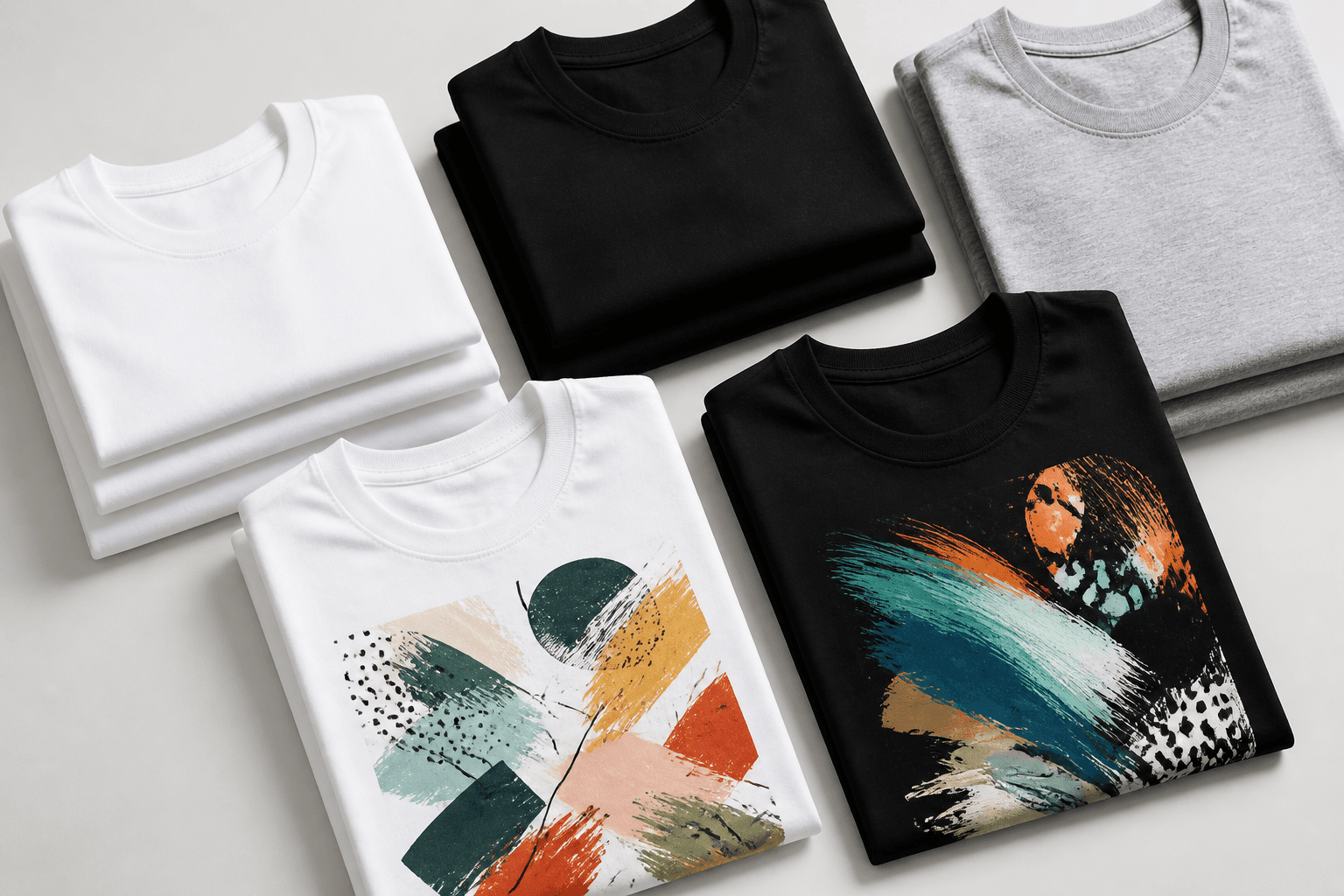
If you want the short answer: for most custom tees in Singapore, DTF (Direct-to-Film) is the most versatile choice — it prints full-colour designs on both cotton and polyester, works for small runs without a big minimum order, and holds up well in the wash. It is the method we use for our custom t-shirt printing. But the genuinely best method depends on your design, your fabric and how many shirts you need — so here is how DTF, DTG, screen printing and sublimation actually compare, and how to choose.
The Four T-Shirt Printing Methods at a Glance
Almost every custom tee you have ever worn was made with one of four methods. Each puts ink onto fabric in a completely different way, and that difference decides what designs look good, which fabrics work, and whether a run of 5 or 500 makes sense.
- DTF — a full-colour design is printed onto a film, then heat-pressed onto the garment. Works on almost any fabric and colour.
- DTG — ink is jetted directly into the fabric like a giant inkjet printer. Best on 100% cotton.
- Screen printing — ink is pushed through a stencil, one screen per colour. Built for big runs of simple designs.
- Sublimation — dye is turned into gas and bonded into polyester fibres. All-over prints, light polyester only.
DTF (Direct-to-Film): The Versatile All-Rounder
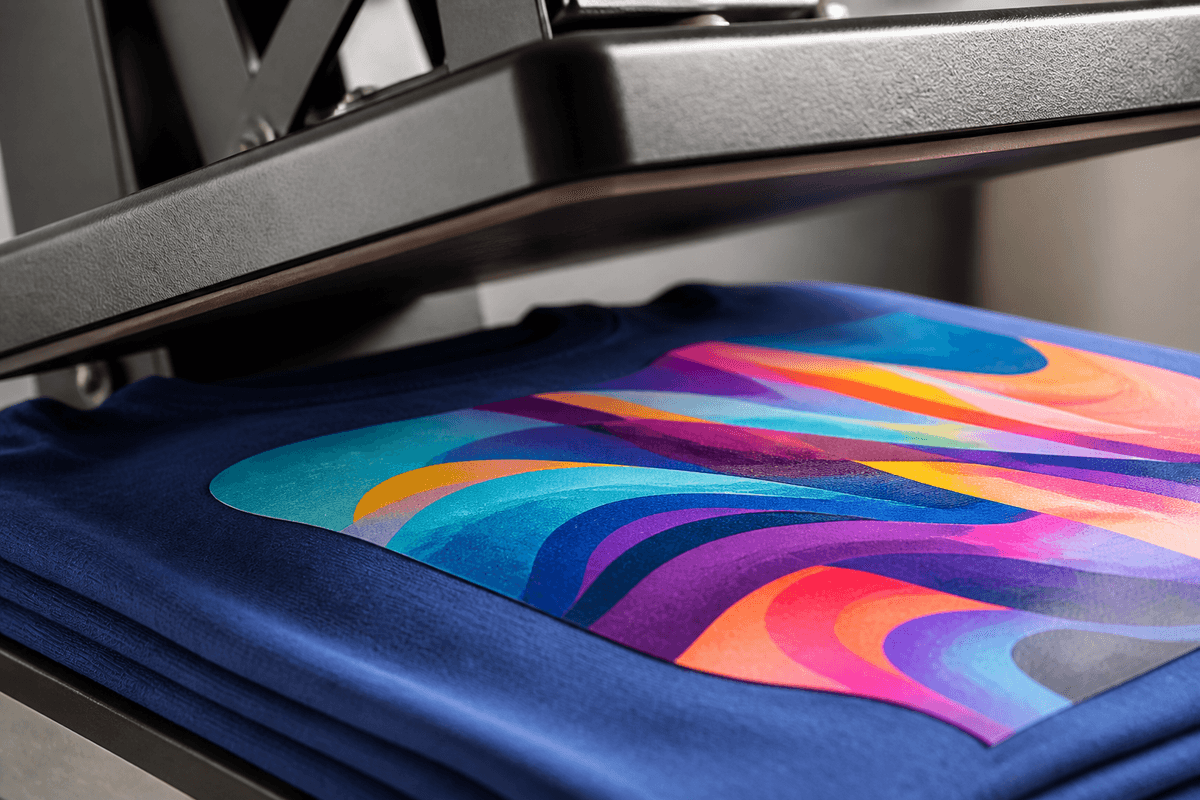
DTF is where a design is printed onto a special film, coated with an adhesive powder, then heat-pressed onto the shirt. The result is a crisp, full-colour transfer that sits on the surface of the fabric.
Why it is our pick for everyday custom tees: it reproduces detailed, multi-colour artwork and gradients cleanly, and — crucially — it works on both cotton and polyester, in light or dark colours. That flexibility is exactly why we print both our Cotton and Dri Fit tees with DTF. There is no per-colour setup the way screen printing has, so a run of a handful of shirts is just as workable as a large batch, and prints stand up to regular washing. If your design is colourful, photographic or just needs to look sharp without a minimum order, DTF is hard to beat. You can see the fabric, colour and print-area options on our t-shirt printing page.
DTG (Direct-to-Garment): Best for Photographic Cotton Prints
DTG works like an inkjet printer aimed straight at the shirt, laying water-based ink into the fabric itself. Because the ink soaks in, the print feels soft — almost part of the shirt — and it captures fine photographic detail beautifully.
The catch is fabric: DTG is happiest on 100% cotton and struggles on polyester and blends, where the ink does not bond as well. It is excellent for one-offs and complex full-colour art on cotton, but it is fussier about garment choice than DTF, which is part of why DTF has become the more flexible option for a mixed range of tees.
Screen Printing: The King of Big, Bold Runs
Screen printing is the oldest method here and still the best for one job in particular: large quantities of a simple, few-colour design. A stencil (screen) is made for each colour and ink is squeegeed through it onto the shirt. The prints are thick, punchy and extremely durable.
The economics are all about volume. Each colour needs its own screen and setup, so a full-colour or photographic design gets expensive fast, and a small run rarely justifies the setup. But if you need hundreds of shirts with a one or two-colour logo — think event crews or sports teams — screen printing is tough to beat on consistency. For most small-to-medium custom orders with detailed artwork, though, DTF gives you the colour freedom without the per-colour setup.
Sublimation: All-Over Prints on Polyester
Sublimation turns solid dye into a gas that bonds permanently into polyester fibres. Because the colour becomes part of the fabric, there is zero hand-feel and the print will never crack or peel — and you can cover the entire garment edge to edge.
The trade-offs are strict, though. Sublimation only works on light-coloured polyester — it cannot print on cotton, and it cannot lay white ink onto a dark shirt. It is the right call for all-over sportswear and jerseys, but for a normal cotton or Dri Fit tee with a logo or graphic, it is the wrong tool.
Which T-Shirt Printing Method Should You Choose?
Match the method to your job, not the other way round:
- Colourful or detailed design, any fabric, small-to-medium run → DTF. The most flexible, which is why it covers the widest range of custom tees.
- Photographic art on 100% cotton, few pieces → DTG.
- Hundreds of shirts, one or two-colour logo → screen printing.
- All-over print on light polyester sportswear → sublimation.
For the vast majority of Singapore businesses, teams and events ordering custom tees, DTF quietly wins because it does the most jobs well without a minimum order. That is exactly why we standardised on it for our round-neck tee printing — and you can match them with our polo shirts and long-sleeve tees for a full uniform set.
Cotton or Dri Fit? Match the Fabric to the Job
Once you have the method, the fabric is the next decision. Our tees come in two: Cotton — a soft, classic 180 g/m² feel that suits everyday wear and retail; and Dri Fit — a 160 g/m² quick-dry microfibre that breathes for sport, events and outdoor teams. Because DTF prints cleanly on both, you can pick the fabric purely on how the shirt needs to feel and perform, then print any design on it. You can also add prints front, back and on the sleeves to make the most of the garment.
Getting Your Artwork Print-Ready
Whatever the method, the print is only as good as the file you send. Two things matter most: supply artwork at print-ready quality — 300 DPI at the size it will actually be printed — so nothing turns soft when it is scaled up; and build your file in CMYK, since print reproduces colour with cyan, magenta, yellow and black inks rather than the RGB light your screen uses. Keeping to CMYK means the colours you approve are the colours you get. Sizes are set in centimetres on the product page, so you always know exactly how big your print will sit on the shirt.
Frequently Asked Questions
What is the difference between DTF and DTG?
DTF prints your design onto a film and heat-presses it onto the shirt, so it works on almost any fabric and colour. DTG jets ink directly into the garment and is best on 100% cotton. DTF is more flexible across fabrics; DTG gives a softer feel on cotton.
Which t-shirt printing method lasts the longest?
Screen printing and DTF both wear well with regular washing when the garment is cared for properly. Sublimation is effectively permanent because the dye becomes part of the fabric, but it only works on light polyester.
Can I print a full-colour or photo design on a t-shirt?
Yes. DTF and DTG both handle full-colour and photographic artwork well. DTF has the edge if you also want it on polyester or dark shirts, or you are ordering a smaller run.
Do I need a big minimum order?
Not with DTF — because there is no per-colour screen setup, small runs are perfectly viable. You can check current options and quantities on the t-shirt printing page.
Which method works on Dri Fit or polyester shirts?
DTF prints cleanly on polyester and quick-dry fabrics like Dri Fit, which is why we use it. Sublimation also works on polyester but only in light colours, while DTG and screen printing are better suited to cotton.
Ready to Print Your Tees?
The method matters, but you do not have to be the expert — pick the fabric and design you want, and DTF handles the rest. Choose Cotton or Dri Fit, add your artwork front, back or sleeve, and set your sizes on our custom t-shirt printing page. Doing polos or long-sleeves for the same team? You can order those alongside, so your whole set stays perfectly on-brand.