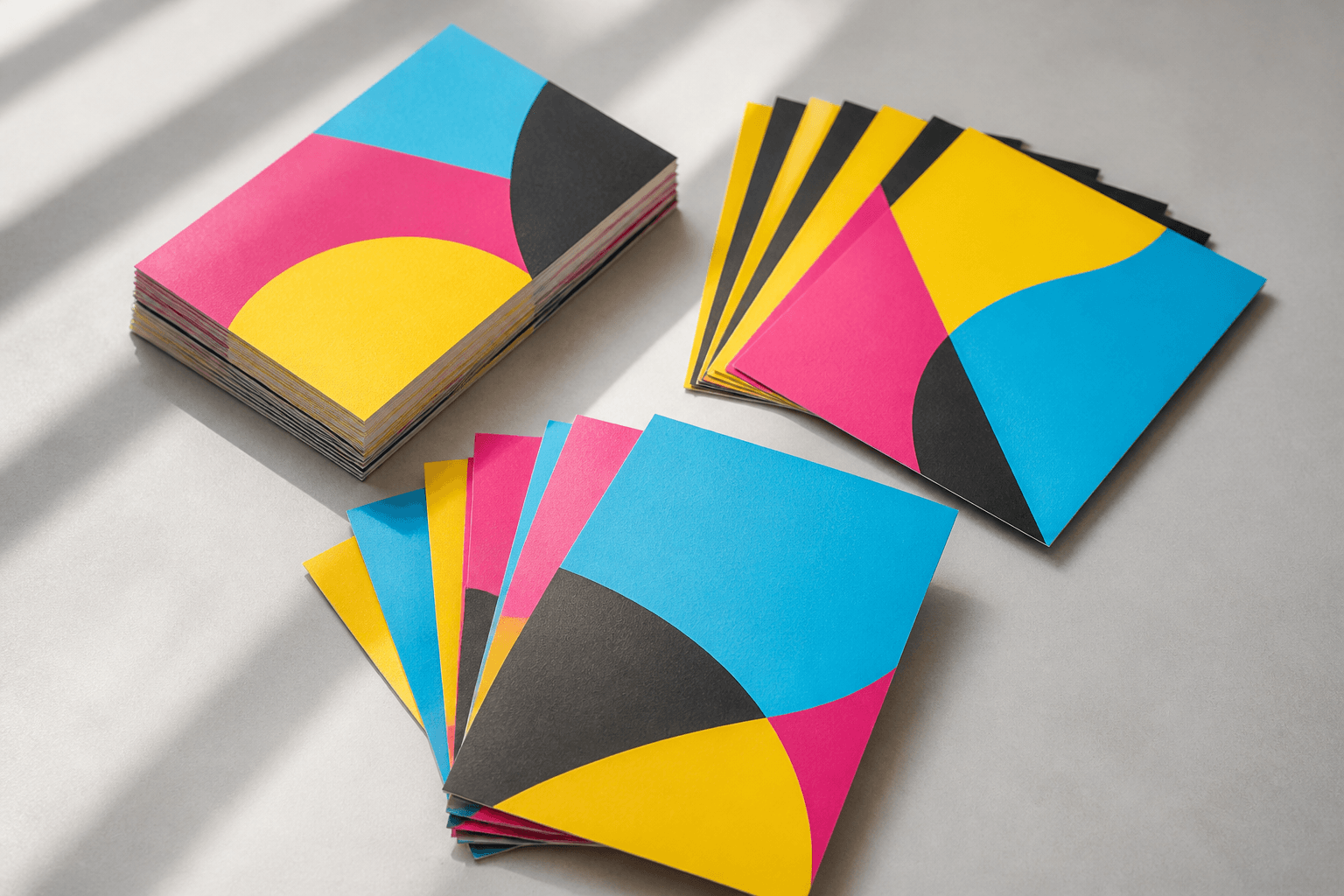
How Many Flyers Should You Print? A Singapore Marketing & Event Guide
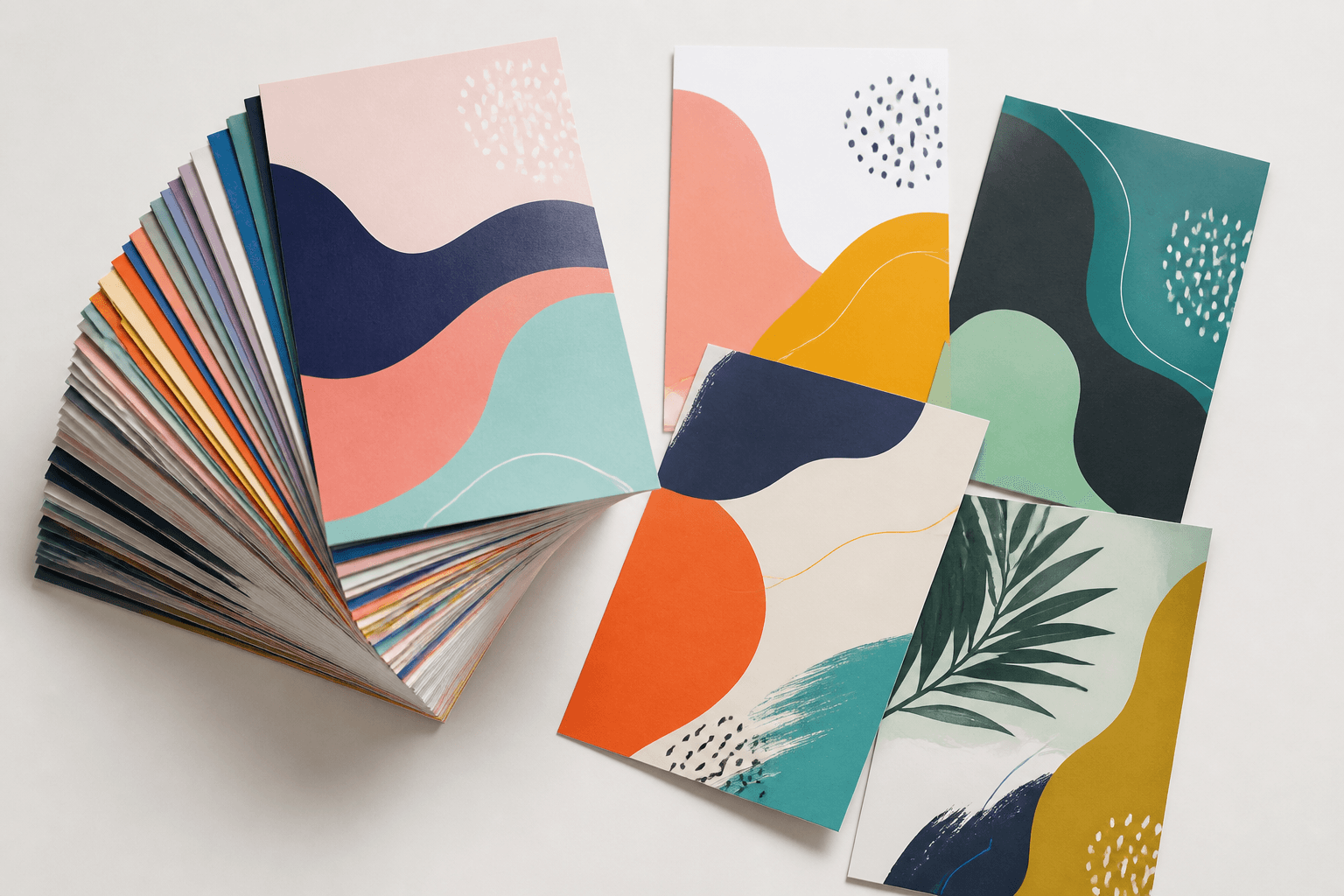
Short answer: print enough to cover every place your flyer will actually be handed out or dropped — plus a small buffer — and let the quantity decide whether you print digital or offset. For small, quick runs our flyer printing in Singapore uses digital; for bulk runs it switches to offset, which gets cheaper per piece the more you print. The trick is matching the number to your distribution plan, not guessing. Here's how to work it out.
Start With the Job, Not the Number
The most common flyer-printing mistake is picking a round number — "let's do 500" — before thinking about where those 500 will go. Quantity is a distribution question. A flyer that lives on a café counter needs a very different run size from one going into 2,000 letterboxes or handed out at a weekend event. Nail down where and how the flyer reaches people first, and the number almost works itself out.
So before anything, answer three things: who is the flyer for, how will it physically get to them, and over how long. Those answers set your quantity — and everything else on the spec follows.
The Quantity Question Is Really a "Digital or Offset" Question
How many you print also decides how it should be printed, and the two options suit very different run sizes:
- Digital — ideal for shorter runs (roughly 50 to 500 pieces). No plates to set up, so small quantities are quick and cost-effective. Perfect for a single event, a trial campaign, or a design you might tweak next month.
- Offset — built for bulk (from a few hundred up to tens of thousands). There's a setup step, but once the press is running the cost per flyer keeps dropping, so it wins decisively at volume — think island-wide letterbox drops or a long retail campaign.
You don't have to figure out the crossover yourself; on the flyer printing page you pick digital or offset and the price updates live as you change the quantity, so you can see exactly where offset starts to make sense for your run.
How Many Flyers for an Event?
Events are the easiest to estimate because you know your headcount. Start with expected attendance, then add for reality:
- Expected attendees — one flyer each is the baseline.
- A buffer of about 10–20% — for walk-ins, people who take two, and the ones that get creased or dropped.
- Team copies — a stack for each person handing them out or manning a booth.
- Leftovers — a small reserve for follow-up: a counter display, the next pop-up, or mailing to no-shows.
So a launch expecting 300 guests might print 400: 300 for attendees, ~50 buffer, and ~50 for the team and afterlife. That's a classic short-to-medium digital run.
How Many Flyers for a Letterbox Drop?
Area marketing is a counting exercise. Decide the blocks or estates you want to reach and count the units — most HDB blocks and condos publish their unit counts, and a target neighbourhood adds up quickly. Print one flyer per letterbox in your chosen area, plus a few percent spare for damaged pieces and the odd block you decide to add. Because these runs climb into the thousands fast, letterbox campaigns are where offset earns its keep.
One honest planning note: not everyone who receives a flyer responds — that's normal for any print or digital channel. Plan your area size around the response you'd need to hit your goal, rather than assuming every drop converts.
How Many Flyers for a Shopfront or Counter?
For an ongoing counter display or shopfront handout, think in daily footfall over time. Estimate how many people pass or enter each day, decide what share you'd realistically give a flyer to, and multiply by the number of days you want the campaign to run. Add a buffer so you don't run dry mid-week. This is usually a steady medium run you top up as needed.
The Golden Rule: Order a Few More Than You Need
Whichever scenario you're in, round up rather than down. The reason is simple print economics: a reprint means starting the job again, so a second short run to cover a shortfall is far less efficient than printing slightly over the first time. Running out of flyers at hour two of an event — or one block short on a drop — costs you more than the handful of extra pieces would have. A modest over-order is cheap insurance.
But Don't Over-Print Either
The opposite trap is ordering 5,000 because the per-piece price looked tempting, then binning 3,000 when the offer expires. Flyers date — prices, dates, QR codes and promotions all have a shelf life. Print for the campaign in front of you, not a hypothetical future one. If you genuinely reprint the same evergreen flyer often, that's a good reason to go offset in bulk; if the content changes, keep runs tight and lean on digital.
Quick Specs That Shape Your Run
A few choices affect how your flyer feels in the hand and are worth setting deliberately:
- Size — A5 (148 × 210 mm) is handy and economical for handouts, A4 (210 × 297 mm) is the most common all-rounder, and A3 (297 × 420 mm) works when the flyer doubles as a mini-poster.
- Paper — lighter art paper from 128 gsm suits mass drops; heavier art card up to around 300 gsm feels more premium for counters and events.
- Single or double sided — a back page buys you room for details, maps or a QR code.
- Lamination — an optional matt or gloss finish adds durability and a more premium feel.
You can set all of these — size, paper, sides and finish — alongside your quantity when you order your flyers, and the live calculator reflects each choice. If your campaign also needs standout signage, pair the drop with posters for walls and windows or a roll-up banner for the event itself.
Get Your Artwork Print-Ready
However many you print, supply artwork at print-ready quality — 300 DPI at the final size — and build it in CMYK, since flyers are printed with cyan, magenta, yellow and black inks rather than the RGB of your screen. Add 2 mm of bleed on every edge so trimming never leaves a white sliver, and keep important text a safe margin inside the cut line. Get the file right and every flyer in the run looks the way you intended.
Frequently Asked Questions
How many flyers should I print for an event?
Start with your expected attendance, add a 10–20% buffer, then include copies for your team and a small reserve for follow-up. A 300-guest event commonly lands around 400 flyers.
Is it cheaper to print more flyers?
The cost per flyer falls as quantity rises, especially with offset printing for bulk runs. But only print what your campaign can actually use — leftover flyers with dated offers are wasted, not saved.
Should I choose digital or offset printing?
Choose digital for shorter runs of roughly 50 to 500, and offset for bulk from a few hundred into the thousands. The product page lets you compare both as you change the quantity.
What is the most common flyer size in Singapore?
A4 (210 × 297 mm) is the everyday all-rounder. A5 (148 × 210 mm) is popular for economical handouts, while A3 (297 × 420 mm) suits flyers that double as small posters.
What's the minimum number of flyers I can order?
Short digital runs start low, so small quantities are viable for a single event or a test campaign. You can see current quantity options on the flyer printing page.
Ready to Print Your Flyers?
Work out where your flyers are going, add a sensible buffer, and let the quantity guide you to digital or offset. When you've got your number, set your size, paper and finish and order your flyer printing in Singapore — the price updates as you go, so you can dial the run in with confidence.