What Is UV DTF Sticker Printing? A Singapore Guide to the Stick-Anywhere Finish
UV DTF sticker printing is a peel-and-press transfer that bonds a full-colour, slightly raised design onto almost any hard surface — glass, metal, wood or plastic — with no heat and no tools. If a normal sticker is a flat label you slap on a laptop, UV DTF is the finish that wraps your logo around a bottle, a tin or a jar and makes it look factory-applied. It is exactly what our UV DTF stickers are built for. This guide explains how UV DTF sticker printing works, what it sticks to, and when to reach for it instead of an ordinary sticker.
What Is UV DTF Sticker Printing?
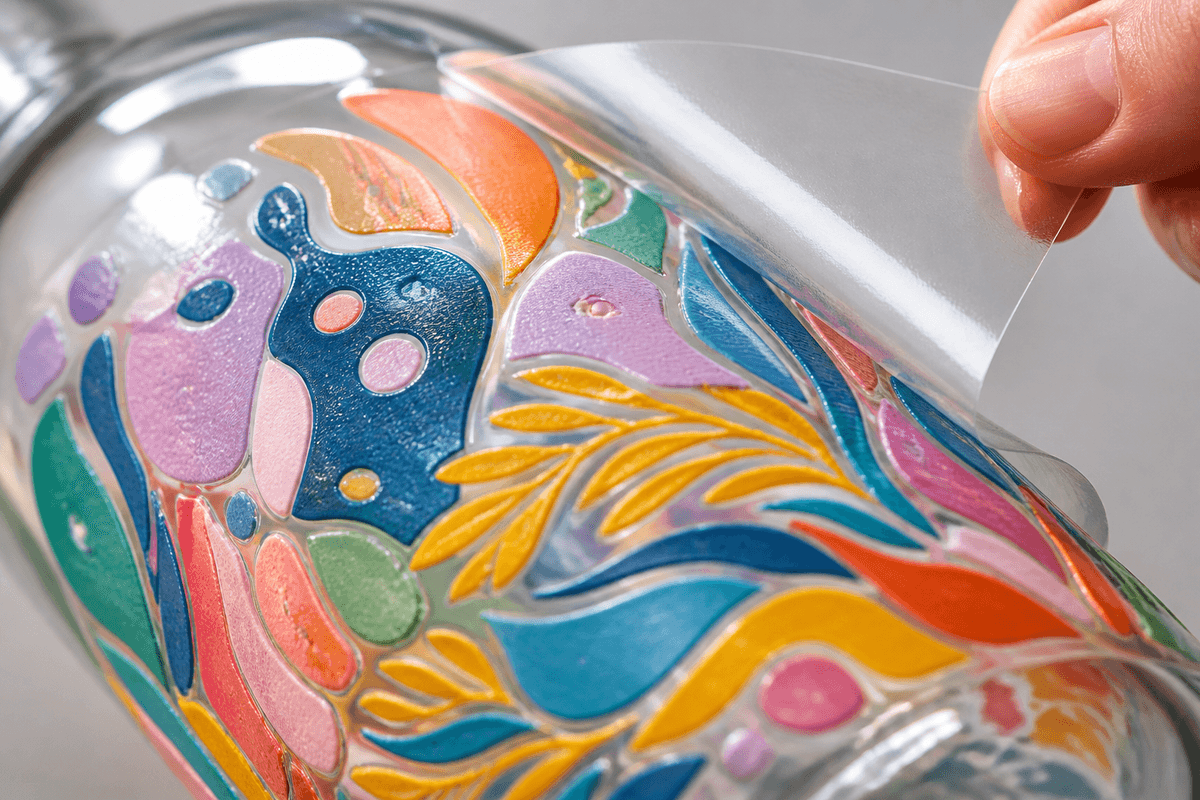
UV DTF stands for UV Direct-to-Film. Your artwork is printed with UV-cured inks onto a special film, along with a layer of adhesive, and finished as a two-part transfer: the printed design sandwiched between a backing layer and a clear application layer. Because the ink is UV-cured, it sets hard and slightly raised, giving the finished mark a subtle embossed, textured feel you can run a thumb over.
The result is not a single flat die-cut label. It is a transfer that carries your whole design — text, icons, multiple elements — onto a surface in one press, then peels away to leave just the artwork behind. That is the core difference that makes it so useful for branding physical products.
How UV DTF Works: Peel, Press, Done
The application is genuinely as simple as the tagline suggests. There is no heat press, no weeding, no special equipment:
- Peel the design off its backing layer.
- Press it firmly onto a clean, dry surface and smooth it down.
- Peel away the clear top film — the design stays bonded to the surface.
That is the whole process. No heat, no tools and no surface restrictions, which is what makes UV DTF the easiest custom finish in print for anyone applying branding by hand — a small team can label a whole batch of bottles or boxes in minutes. You can set up your own designs and sheet sizes on our UV DTF sticker page.
What Surfaces Does UV DTF Stick To?
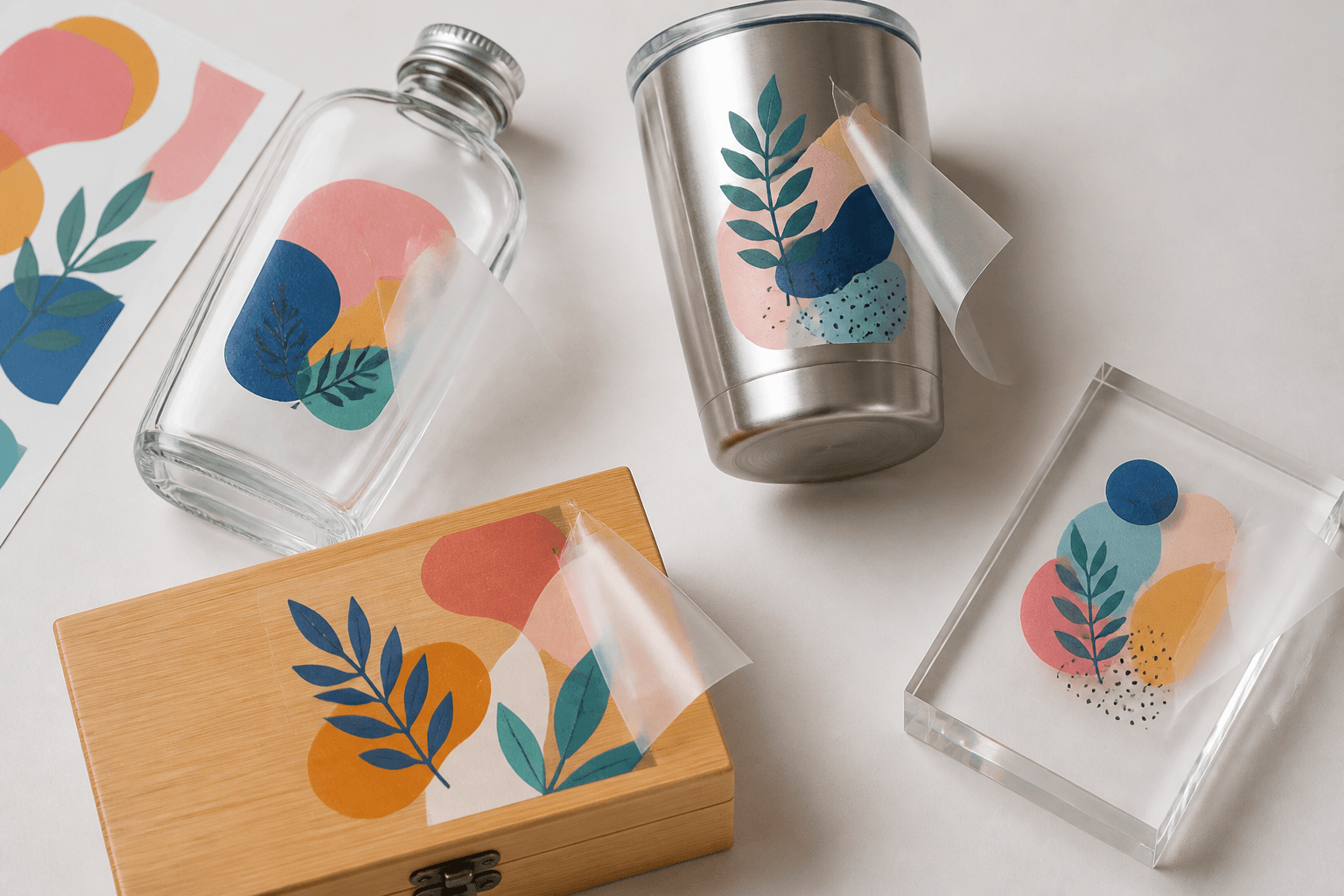
This is where UV DTF earns its keep. Ordinary stickers prefer flat, smooth surfaces; UV DTF bonds to hard surfaces that other stickers struggle with, including curved and textured ones:
- Glass — bottles, jars, candles, drinkware, glass signage.
- Metal — tins, flasks, tumblers, hardware, equipment plates.
- Wood — crates, boxes, coasters, gift packaging.
- Plastic — containers, phone cases, laptops, acrylic displays.
Because the transfer includes a white ink layer under the colours, your artwork stays bright and opaque even on clear glass or dark surfaces — a plain sticker printed without white ink would look washed out or see-through on those. That single feature is why UV DTF has become the go-to for product and drinkware branding.
UV DTF vs a Normal Sticker: Which Should You Choose?
They solve different problems, so the right choice comes down to what you are sticking it on.
Choose UV DTF when the surface is a hard 3D object — glass, metal, wood or plastic — especially anything curved, and when you want a premium, slightly raised finish that looks built-in. It is ideal for drinkware, jars, tins, laptops and product packaging.
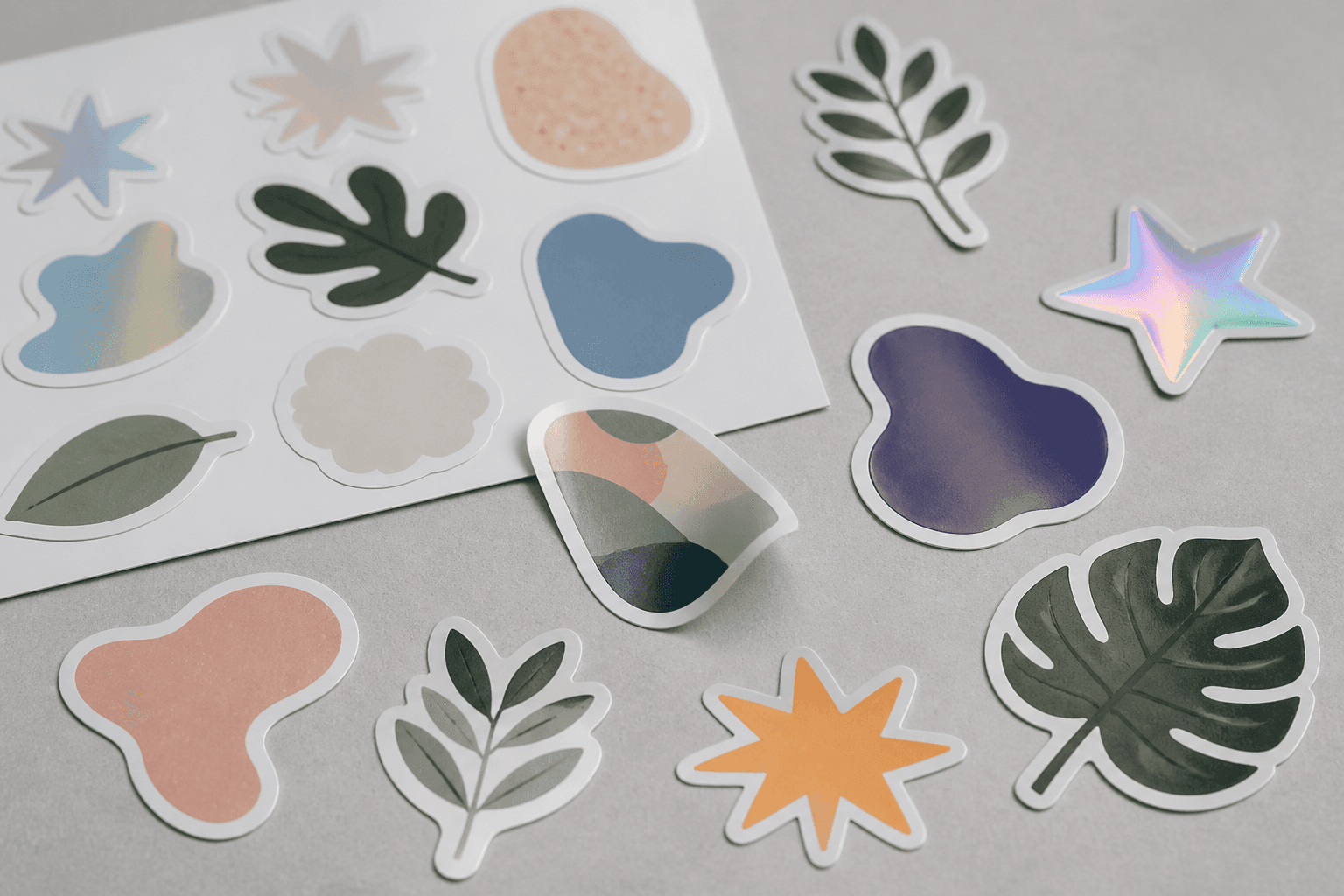
Choose a normal sticker when you want a flat, peel-and-stick label: packaging seals, laptop art, event swag, product labels and anything where you need a specific die-cut shape or a run of one design. Our custom stickers are die-cut to any outline and printed on seven finishes, from waterproof gloss to metallic gold, which UV DTF does not offer. In short: stickers for flat surfaces and custom shapes; UV DTF for hard, curved and 3D objects. Plenty of brands order both.
Where UV DTF Sticker Printing Shines
Some of the most common jobs UV DTF handles beautifully:
- Drinkware branding — tumblers, water bottles and glass cups for cafés, gyms and corporate gifts.
- Product packaging — logos on glass jars, metal tins and wooden gift boxes that need to look retail-ready.
- Small-batch merchandise — branding candles, hampers and launch kits without a factory print run.
- Devices and cases — clean, durable logos on laptops, phone cases and acrylic stands.
- Signage accents — crisp branding on glass doors and display units.
Designing Artwork for UV DTF
The transfer is only as sharp as the file you send. Two rules cover most of it: supply print-ready artwork at 300 DPI at the size it will be applied, so fine text and edges stay crisp; and build your file in CMYK, because print reproduces colour with cyan, magenta, yellow and black inks rather than the RGB light on your screen — keeping to CMYK means the colours you approve are the colours you get. One handy advantage of UV DTF: you can arrange several different designs together on a single sheet, so a set of product logos or a mix of sizes can be printed in one go. Sizes are set in millimetres and centimetres on the product page, so you always know exactly how large each mark will sit on your bottle or box.
Frequently Asked Questions
What does UV DTF stand for?
UV Direct-to-Film. Your design is printed with UV-cured inks onto a film with an adhesive layer, then transferred onto the surface by peeling and pressing — no heat needed.
What is the difference between UV DTF and a regular sticker?
A regular sticker is a single flat adhesive label, best on smooth surfaces and available in custom die-cut shapes and finishes. UV DTF is a transfer that bonds to hard, curved and 3D surfaces like glass, metal, wood and plastic, with a slightly raised, premium feel.
What surfaces can UV DTF stick to?
Glass, metal, wood and plastic — including bottles, tins, jars, laptops and packaging. Thanks to a white ink layer, the design stays opaque even on clear or dark surfaces.
Do I need a heat press or any tools to apply it?
No. UV DTF is peel, press and done — no heat, no weeding and no special tools, which makes it easy to apply by hand across a whole batch of items.
Can I fit more than one design on a sheet?
Yes. You can arrange multiple designs and sizes on a single UV DTF sheet, which is handy for a set of product logos or a mix of small marks.
Ready to Stick Your Brand on Anything?
If you are branding drinkware, jars, tins, laptops or packaging, UV DTF sticker printing gives you a durable, premium, peel-and-press finish that looks built into the product. Upload your artwork, arrange your designs and set your sizes on our UV DTF sticker page — and if you also need flat die-cut labels or packaging seals, pair it with our custom stickers so every surface is covered.