Types of Business Card Printing: A Singapore Guide to Methods, Stocks and Finishes
There are a handful of main types of business card printing: digital printing, offset printing, letterpress, and a set of finishing processes (foil hot stamping, spot UV, lamination, rounded corners and coloured edges) layered on top of the card stock. If you want a card that feels expensive the moment it lands in someone's hand, the answer is usually not one exotic method. It is thick stock plus one or two well-chosen finishes, which is exactly how our luxury business card printing in Singapore is built. This guide walks through each type, what it is good for, and how to choose for your brand.
The main types of business card printing at a glance
When people search for "types of business card printing", they are really asking two questions at once: how is the ink put on the card, and what is done to the card afterwards? Separating the two makes the choice much easier.
- Printing method - how the design gets onto the paper: digital, offset or letterpress.
- Card stock - what you print on: standard card, thick multi-layer card, plastic (PVC), clear or frosted stock.
- Finishing - what happens after printing: lamination, foil hot stamping, spot UV, rounded corners and edge colouring.
Most business card printing in Singapore combines one method, one stock and zero to three finishes. Below, each layer is explained in plain language.
Digital printing: the modern default
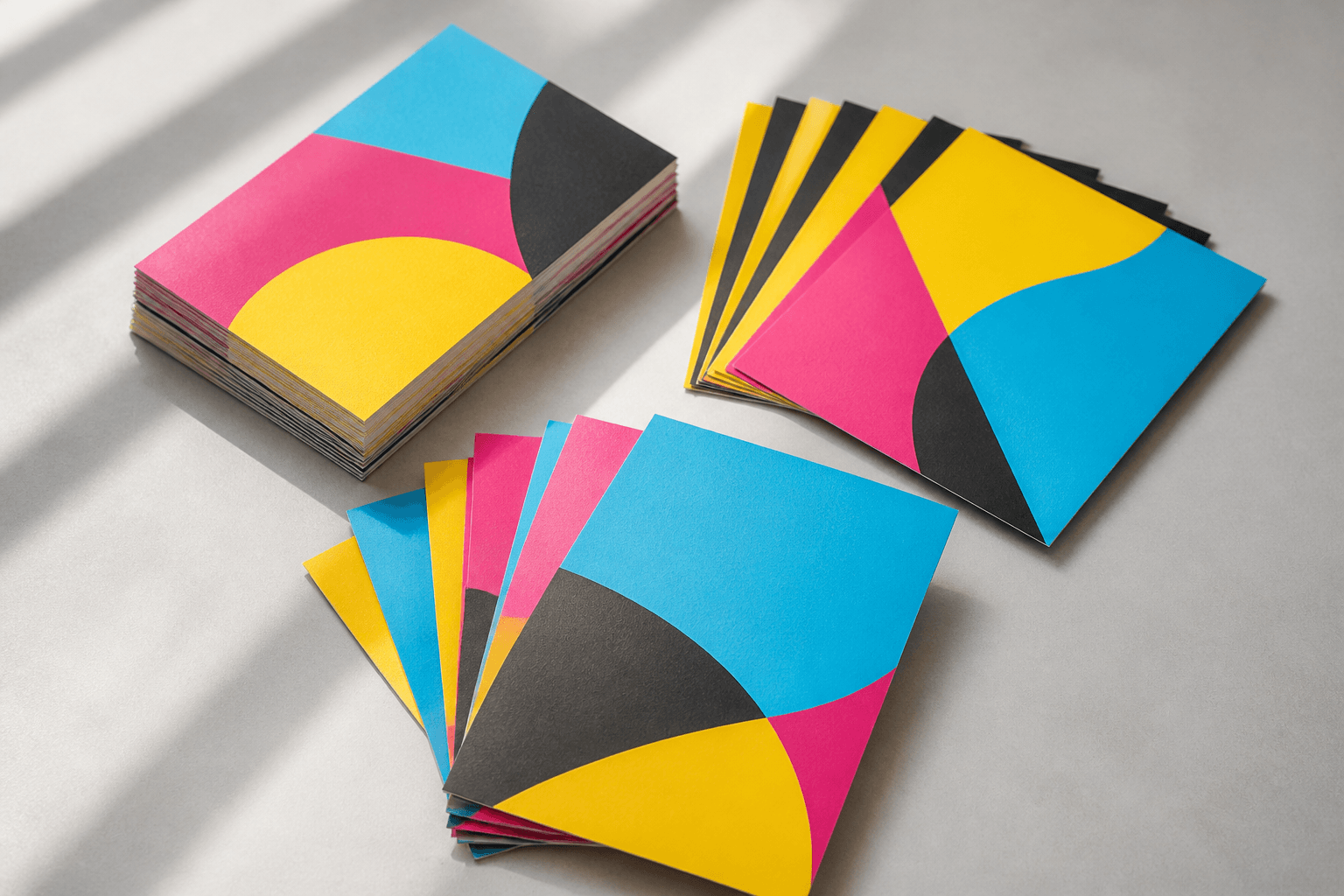
Digital printing works much like a very large, very precise office printer. The press reads your file and lays down CMYK toner or ink directly onto the sheet, with no printing plates involved. Because there is no plate set-up, digital is efficient for the box-sized runs most businesses actually order, such as a box of 100 cards per person.
Digital printing has a few practical advantages for business cards:
- Every card can be different. Names, titles and even whole designs can change from card to card in the same run, which is ideal when you are ordering for a whole team.
- Sharp, consistent colour from a print-ready, 300 DPI CMYK file.
- Works with premium finishes such as lamination, hot stamping and spot UV.
Both our standard name cards and our thick luxury name cards are digitally printed. On the luxury range you can mix names and designs in one order, while the paper, finishes and edge colour stay the same across the whole order.
Offset printing: built for very long runs
Offset (or offset lithography) transfers ink from metal plates onto a rubber blanket and then onto the paper. It is the traditional workhorse of commercial printing and shines when you need very large quantities of the identical design, because the plate cost is spread across many thousands of sheets.
For business cards, offset makes the most sense when one design is printed in bulk. For the typical case of a few boxes per person, each with a different name, digital is usually the more practical choice, which is why modern card printing leans so heavily on it.
Letterpress: the pressed-in, tactile look
Letterpress is the oldest method on this list. A raised plate is inked and pressed firmly into thick, soft paper, leaving a visible bite in the card. It is loved for wedding stationery and boutique brands because you can feel the impression with your fingertips.
The trade-off is that letterpress works best with simple, solid artwork in one or two spot colours rather than full-colour photos or gradients. If what you actually want is the weight and tactile presence of letterpress, a thick multi-layer card with a coloured edge and a foil or spot UV detail often gets you much of the same "this feels special" reaction while keeping full CMYK colour.
Card stock types: where the luxury feel really comes from
Ask anyone why a card felt premium and they will usually say "it was thick". Paper weight is measured in grams per square metre (gsm). A typical everyday name card sits in the few-hundred-gsm range, while luxury cards go far heavier by bonding several layers of card together.
Our luxury card range comes in three thickness tiers:
- Duplex (about 500gsm) - the entry premium card, heavier than a standard name card yet still slim enough for a wallet. It carries a standard white edge.
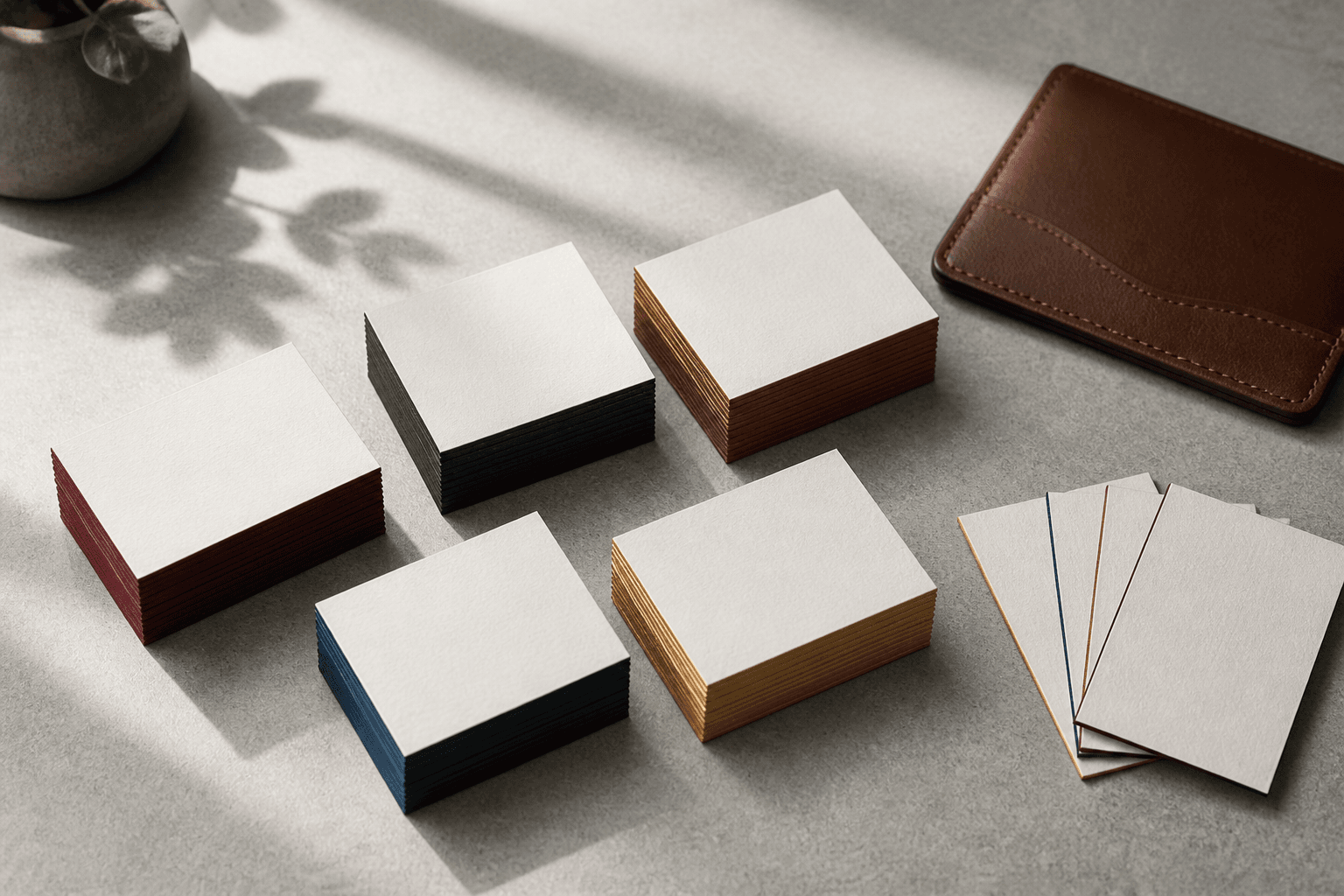
- Triplex (about 700gsm) - the executive standard, with a bolder hand-feel and room for a coloured edge band.
- Quadplex (about 900gsm) - the heaviest tier, a desk-and-keepsake card that usually sits beyond wallet thickness.
On top of the thickness tier, you choose the surface paper your contact actually touches. The six surfaces on the luxury range are Art Card, Tangerine White, Maple Bright, Maple White, Grandeur White and Shiruku Ivory, and they all cost the same, so you can pick purely on feel.
Beyond paper, there are other stock types worth knowing about. Plastic PVC cards are waterproof and built for the wallet, while a transparent business card on clear, frosted or translucent stock makes people hold it up to the light. These are different products with their own strengths, but if "premium paper feel" is the goal, thick multi-layer card is the classic route.
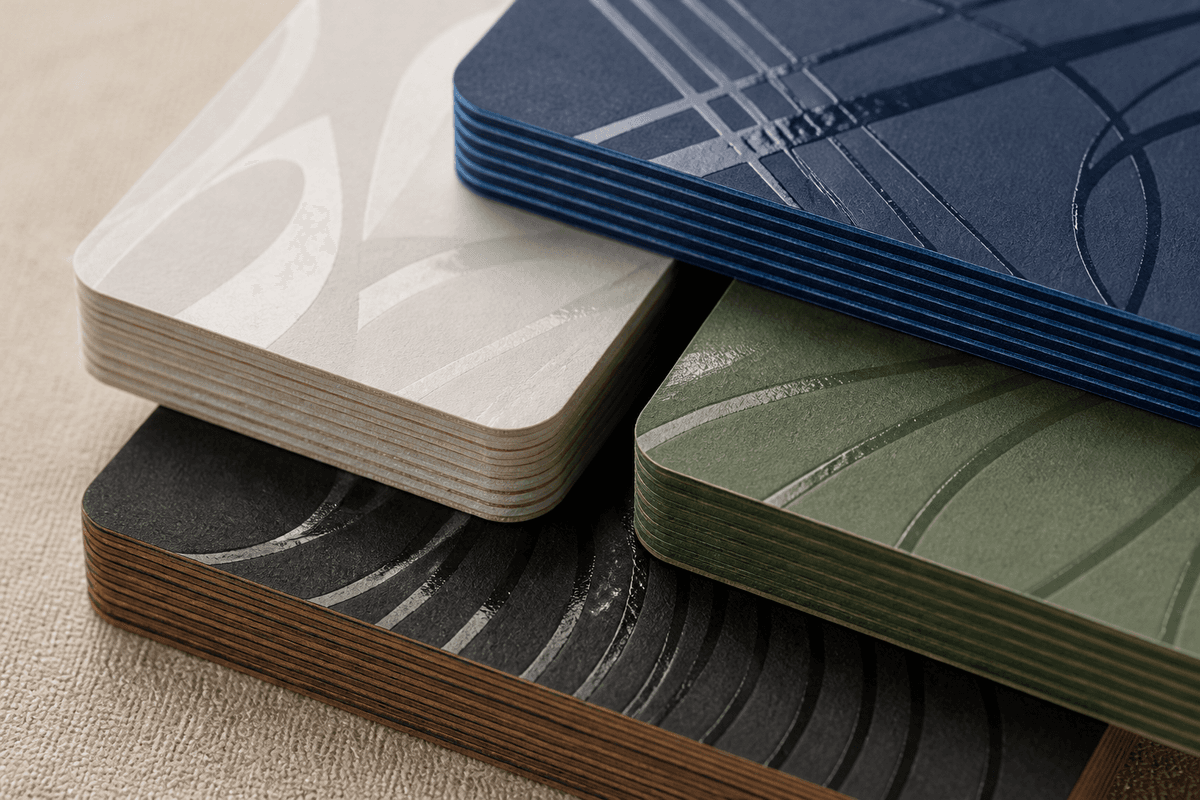
Finishing types: lamination, foil, spot UV, corners and edges
Finishing is where a good card becomes a memorable one. Here are the main finishing types and what each one does.
Matt or gloss lamination
Lamination is a thin film sealed over the printed face. Matt lamination gives a soft, velvety, glare-free feel; gloss lamination makes colours look brighter and more saturated. Beyond looks, lamination protects the print from scuffs. On luxury cards we strongly recommend it, because the seal shields the face from knife marks and scuffing when the cut stack is fanned apart.
Foil hot stamping
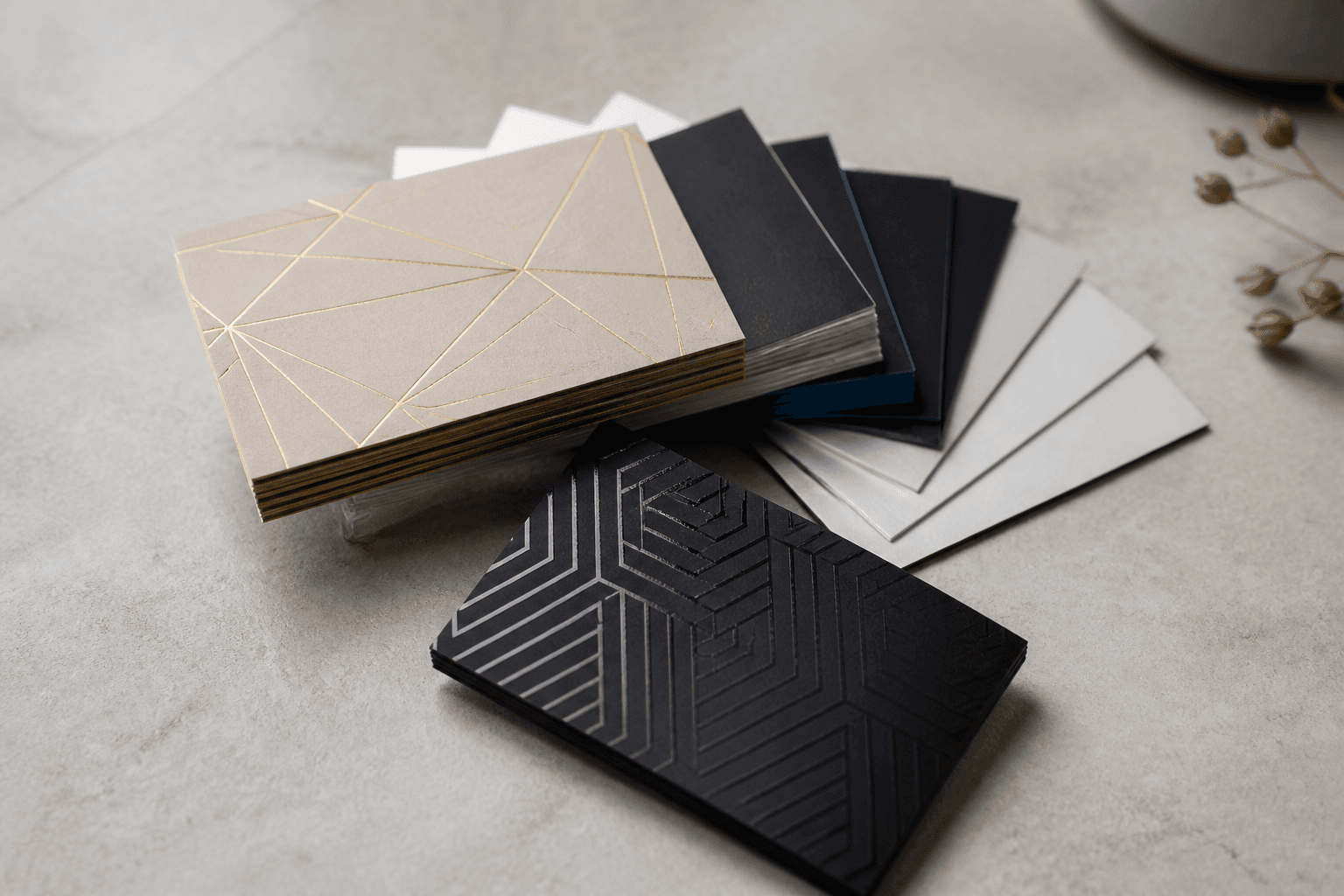
Hot stamping uses heat and pressure to transfer a metallic foil onto part of the design, typically a logo or a name. On our luxury cards you can choose gold, rose gold or silver foil. Keep foil areas reasonably bold, since very fine hairlines and tiny text are harder to reproduce cleanly in foil.
Spot UV
Spot UV applies a clear, glossy coating to selected areas only, so a logo or pattern catches the light against the rest of the card. It reads best on a matt-laminated face, because the glossy spots need a matt base to stand out.
Rounded corners
Rounded corners soften the card's silhouette and help it resist dog-eared corners in a wallet. Luxury cards offer corner radii from 3mm up to 10mm, so you can go from a subtle ease to a clearly rounded shape.
Coloured edges
This is the signature detail of thick cards. On a multi-layer card, the edge is thick enough to show a band of colour when the card is seen side-on. Coloured edges are available on Triplex and Quadplex luxury cards, chosen from a set swatch in the calculator.
All four main finishes (lamination, rounded corners, hot stamping and spot UV) can be switched on independently and combined in one order. Build your luxury business card on the product page and the price updates live as you change the tier and finishes.
How to choose the right type of business card printing
Rather than starting with the method, start with how the card will be used:
- Everyday networking, large teams, frequent reorders: a standard name card on a good paper stock with matt lamination is hard to beat for value.
- Client-facing roles, consultants, property, legal, finance and creative studios: a Duplex or Triplex luxury card with a coloured edge and one finish (foil or spot UV) signals care without looking flashy.
- Founders, directors and keepsake moments: Quadplex with a coloured edge and hot-stamped logo is the "put it on the desk" card.
- Outdoor or wet environments: PVC is the practical choice.
A simple rule: pick one hero detail. A thick card with a coloured edge and a foil logo looks confident; a card with every finish at once can look busy.
Artwork tips so your print comes out right
Whichever type of business card printing you choose, the file you send decides the result. A few checks go a long way:
- Supply a print-ready PDF or layered AI file at your card size, such as the common 90 × 54mm format, with 2mm bleed all round.
- Work in CMYK at 300 DPI, with fonts outlined or embedded.
- Keep important text a few millimetres inside the trim line so nothing gets cut off.
- For hot stamping or spot UV, put the foil or spot area on its own named layer so it can be separated from the colour print.
- Double-check phone numbers, emails and spelling on every name before you approve.
Frequently asked questions
What is the most common type of business card printing?
Digital printing is one of the most common methods for business cards today, because it handles short runs and different names per card efficiently while working with finishes like lamination, foil and spot UV.
What makes a business card feel luxurious?
Mostly thickness and finishing. A heavy multi-layer card, a coloured edge and one well-placed finish such as foil hot stamping or spot UV do more for perceived quality than any single printing method.
Is double-sided printing more expensive on luxury cards?
No. On our luxury cards, the per-box rate is the same whether you print one side or both, so print whichever side count your design needs.
Can I combine foil and spot UV on the same card?
Yes. Lamination, rounded corners, hot stamping and spot UV can all be combined on the same order. For the best spot UV contrast, pair it with matt lamination.
Ready to print a card that gets kept?
Understanding the types of business card printing makes the choice simple: digital print for flexibility, thick multi-layer stock for presence, and one or two finishes for character. If you want a card that people hold a beat longer, choose your thickness tier, surface paper, edge colour and finishes, then order your luxury business cards on the Luxury Business Card page and watch the price update as you build.