Name Card Printing in Singapore: Prices, Paper and Finishes Explained
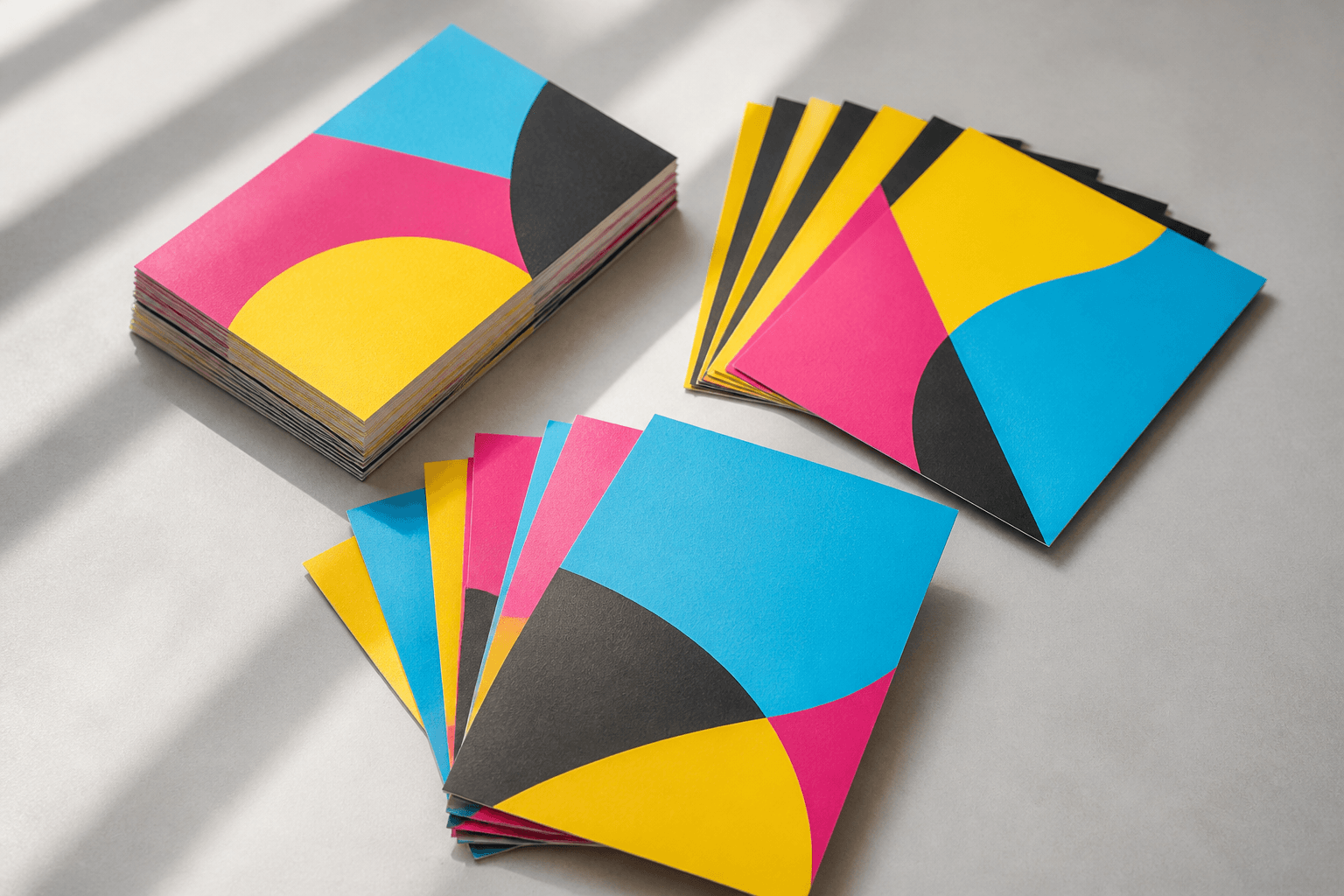
A name card is the smallest thing your business prints and the one most likely to be judged in someone's hand. The weight of the stock, the surface, the way the edges are cut — people read all of it in the two seconds before they read a single word. This guide covers name card printing in Singapore from a buyer's point of view: what it costs, which paper to pick, which finishes are worth paying for, and how to get from artwork to a box of cards without a reprint.
The good news is that the decisions are few. Pick a stock, decide on one or two finishes at most, supply a clean file, and the result feels considered. Try to use every finish at once and it feels like a sample card.
What name card printing costs in Singapore
Name cards are digitally printed in full colour and priced per box of 100 cards. The per-box rate drops as you add boxes to the order:
| Boxes (100 cards each) | 250GSM art card, per box | Works out to |
|---|---|---|
| 1 | S$24 | 24¢ per card |
| 2 | S$23 | 23¢ per card |
| 5 | S$20 | 20¢ per card |
| 10 | S$14 | 14¢ per card |
Premium stocks cost more — the 350GSM textured papers run from S$40 per box, easing to S$31 per box at ten boxes — and finishes like lamination, hotstamping and spot UV are added on top. The name card printing calculator prices your exact combination live, so you can weigh a finish against its cost before committing.
One rule to know before you order: each box prints one design. A team of five people is five boxes — which conveniently also moves you down the volume tiers.
The standard size: 90 × 54 mm
Singapore name cards are 90 × 54 mm, a slightly wider cut than the 85 × 55 mm common in Europe. Design to the exact size, keep text away from the edges, and export in CMYK. We've covered the file setup in detail — bleed, safe margins and template dimensions — in our guide to the name card size in Singapore, so this article stays on the buying decisions.
Choosing your card stock
The stock is the handshake. Seven options cover three tiers:
- 250GSM art card — the workhorse. Sturdy enough to feel professional, smooth enough to print vivid colour, and the most economical box. If you're printing your first cards or a large team, start here.
- 300GSM art card — the same smooth surface with noticeably more stiffness. The extra weight reads as substance the moment the card changes hands.
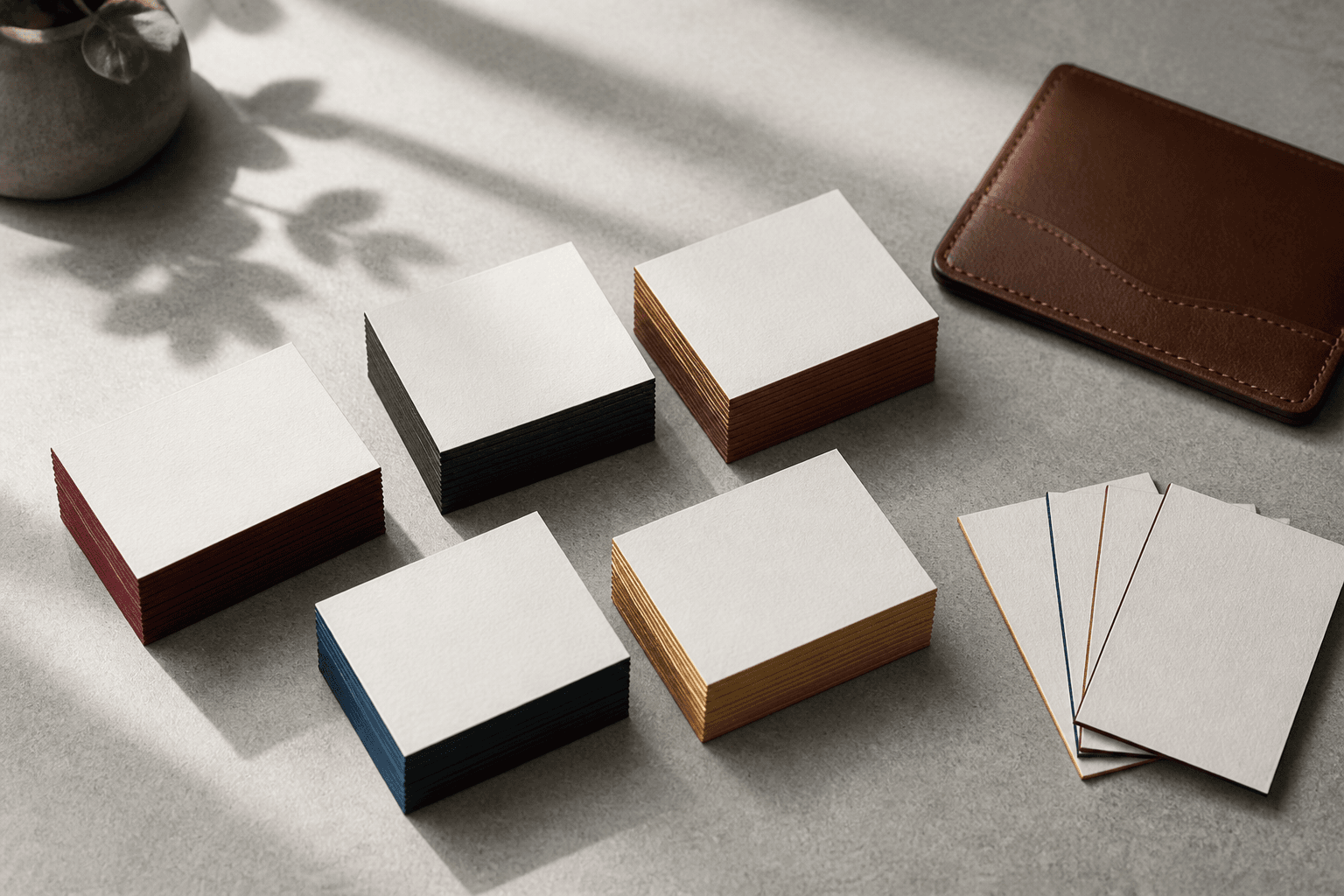
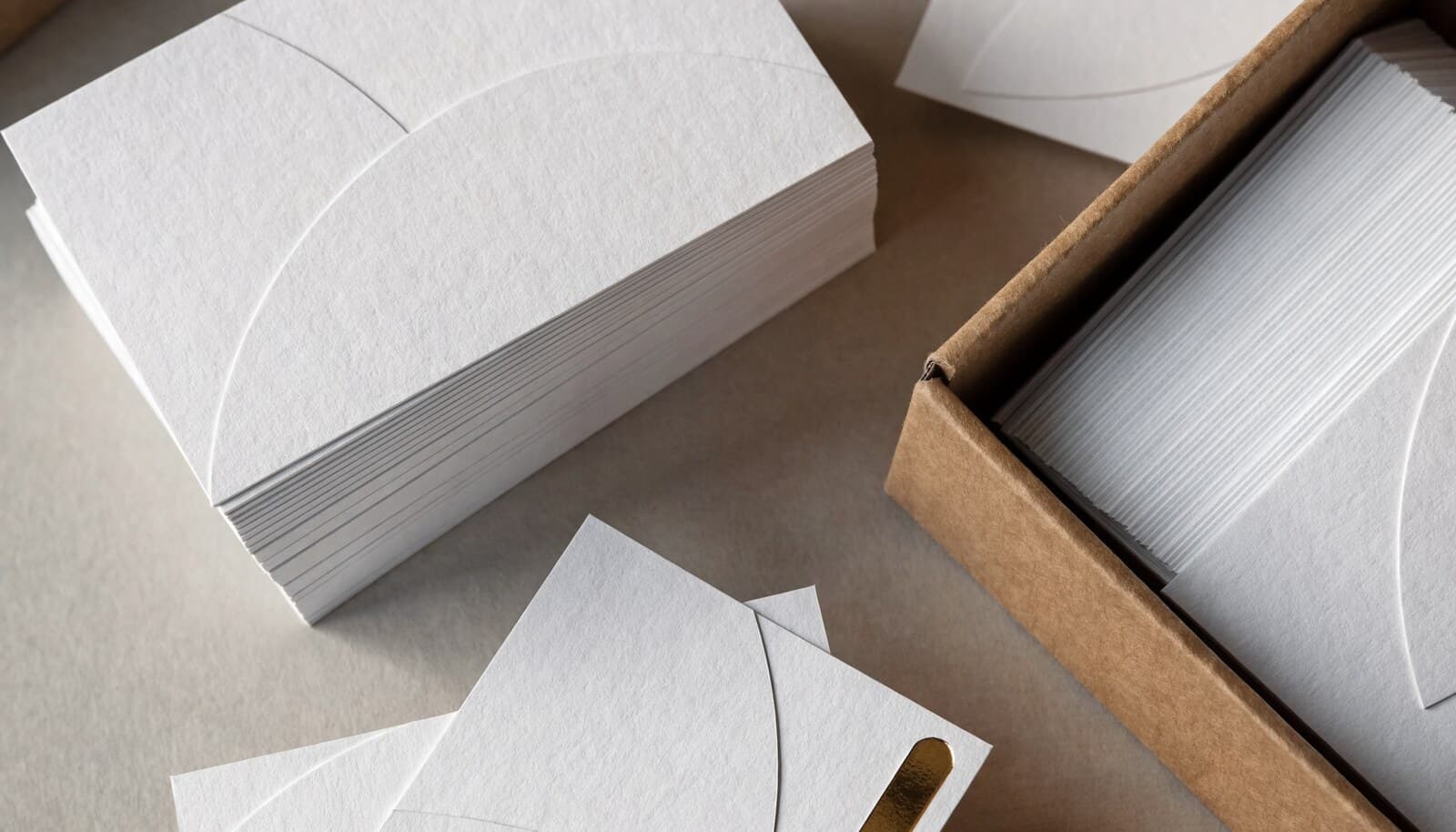
- Textured and natural whites — 200GSM Tangerine White, 300GSM Maple White and Maple Bright, 350GSM Grandeur White, 300GSM Shiruku Ivory — uncoated, tactile papers in warm and bright whites. Colours print softer and more muted than on art card, which is exactly the point: these stocks suit brands that want understated and expensive rather than glossy and loud. The 350GSM options are the thickest cards we print.
If you're torn: art card for colour-heavy designs and photographs, textured stock for type-led, minimal designs with room to breathe.
Finishes that earn their keep
Every finish exists to be felt or caught in the light. Used singly, on the right design, they lift a card; stacked together they compete.
- Matt or gloss lamination — a protective layer over the whole card. Matt deepens colours and gives a soft, fingerprint-resistant surface that has become the default professional look. Gloss makes colour and photography pop. Lamination also stiffens the card slightly — a laminated 250GSM feels closer to a heavier stock.
- Rounded corners — cut at a radius from 3 mm (subtle) to 10 mm (unmistakably rounded). Rounded corners resist the dog-earing that square corners collect in wallets, and they soften a hard-edged design.
- Hotstamping — a metallic foil pressed into the card in gold, rose gold or silver. Nothing else catches light the same way; it's the finish people tilt the card to look at. Best on one element — a logo or a name — not paragraphs.
- Spot UV — a clear gloss layer over chosen areas only, usually on a matt-laminated card. The contrast between the flat card and the glossy detail reads as premium without any metallic flash. It also lets you add a subtle second layer — a pattern or watermark that only appears at an angle.
Common name card mistakes
- Ordering the minimum for a whole team. Each box is one design, so five staff can't share a box. Price it as five boxes — the volume tiers soften the difference.
- Cramming both sides. A packed back face makes the card feel like a leaflet. One strong side plus a quiet back (logo, pattern or a single QR code) keeps it composed.
- Tiny type on textured stock. Uncoated papers absorb more ink; fine 6pt text can fur. Keep small text solid and dark on textured stocks.
- Every finish at once. Hotstamp or spot UV — pick the one that suits the design. Both together fight for attention on 90 × 54 mm of space.
- RGB files. Screens show RGB; presses print CMYK. Export in CMYK so the printed blue is the blue you approved.
Frequently Asked Questions
How much does name card printing cost in Singapore?
From S$24 for a box of 100 cards on 250GSM art card, stepping down to S$14 per box when you order ten boxes. Premium 350GSM textured stocks start from S$40 per box, and finishes like lamination, hotstamping and spot UV are priced on top in the calculator.
How many cards come in a box?
Each box contains 100 cards of a single design. Different names or designs are ordered as separate boxes — and more boxes push the whole order into cheaper per-box tiers.
How fast can name cards be printed?
Name cards are typically ready in about 1 working day after proof approval, with free collection at Paya Lebar Square or island-wide delivery. For genuinely urgent orders, message us on WhatsApp about express turnaround.
What is the standard name card size in Singapore?
90 × 54 mm. Design at that exact size in CMYK with bleed, and keep names and numbers inside a safe margin — our name card size guide walks through the full file setup.
Should I choose 250GSM or a thicker card?
250GSM art card is the sensible default: sturdy, vivid and the best value. Step up to 300GSM for extra stiffness, or to a 350GSM textured stock when the brand calls for a tactile, premium card — the thickness is something people notice immediately.
Ready to print
Pick a stock that matches the brand's temperature, add at most one or two finishes that suit the design, and supply a CMYK file at 90 × 54 mm. That's the whole recipe for cards that survive the two-second judgement. When you're ready, build your order on the name card printing in Singapore page — choose your paper, preview the finishes, set the number of boxes and the calculator prices it as you go.
This article is part of our full guide to printing services in Singapore — prices, turnaround times and how to choose a print shop.